
Voice Isolator
Supprimez le bruit de fond de n'importe quel audio avec l'IA, instantanément.
Écoutez la Différence
Découvrez comment notre IA isole la voix du bruit de fond
[Example]Cafe background noise
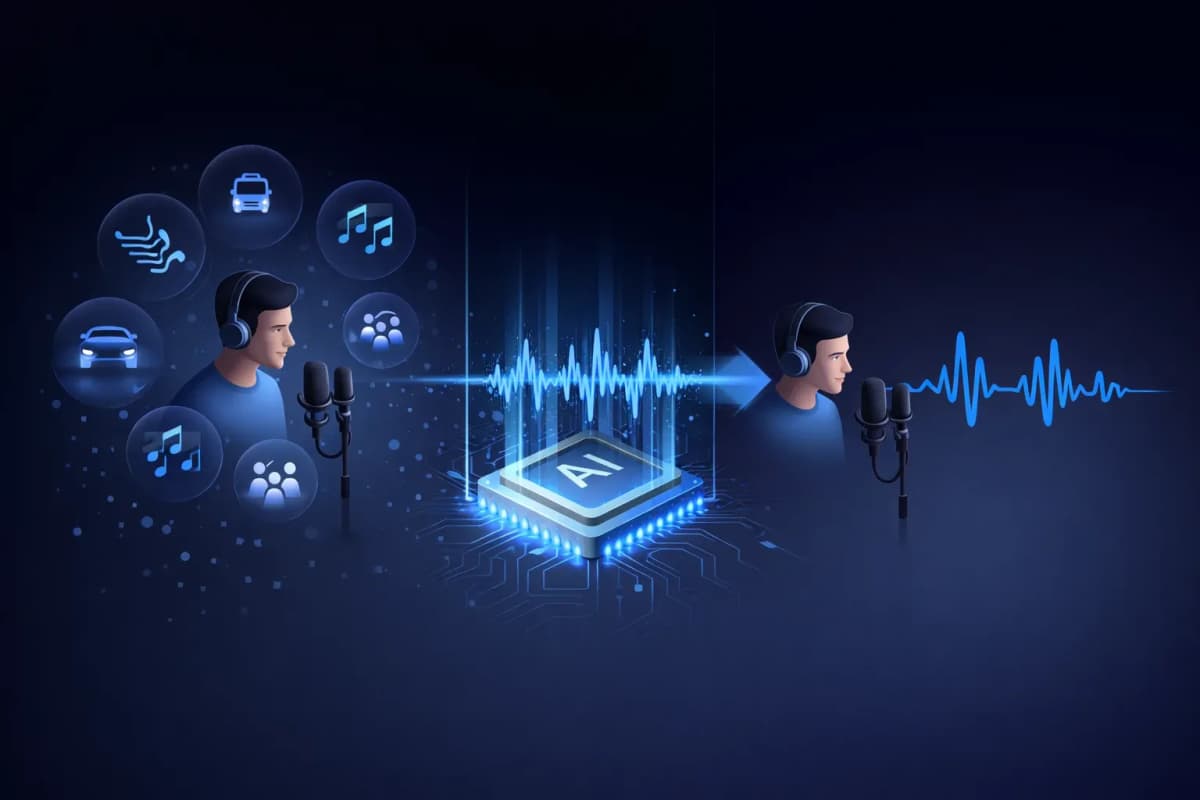
Qu'est-ce qu'un Isolateur Vocal?
Un isolateur vocal est un outil alimenté par l'IA qui sépare la parole humaine du bruit de fond dans les enregistrements audio. Contrairement aux filtres de bruit traditionnels qui réduisent simplement les niveaux de volume, notre isolateur vocal IA utilise des réseaux neuronaux d'apprentissage profond pour identifier et extraire les motifs vocaux tout en supprimant les sons indésirables comme la musique, le trafic, le vent et le bruit ambiant. Le résultat est un audio vocal propre, de qualité studio, qui sonne comme s'il avait été enregistré dans un environnement professionnel.
Fonctionnalités Clés de Notre Isolateur Vocal IA
Isolation Vocale par IA
Réseaux neuronaux d'apprentissage profond entraînés sur des millions d'échantillons audio pour séparer précisément la voix de tout bruit de fond.
Support Multi-Format
Téléchargez des fichiers audio MP3, WAV, OGG, AAC ou FLAC. Notre isolateur vocal gère tous les principaux formats audio.
Traitement Ultra Rapide
Obtenez votre audio vocal isolé en 20 à 40 secondes. Plus d'attente pour de longs temps de traitement.
Qualité Studio
Préservez les caractéristiques vocales naturelles tout en supprimant le bruit. Le résultat sonne comme s'il avait été enregistré dans un studio professionnel.
Intégré avec TTS et Clonage
Flux de travail unique: isolez une voix, puis clonez-la ou générez une nouvelle parole. Tout sur une seule plateforme — uniquement sur AnySpeech.
Confidentialité en Priorité
Vos fichiers audio sont automatiquement supprimés après 7 jours. Nous ne partageons ni n'utilisons jamais vos données pour l'entraînement.

Comment Utiliser Notre Isolateur Vocal
Téléchargez Votre Fichier
Glissez-déposez ou cliquez pour télécharger votre fichier audio. Compatible MP3, WAV, OGG, AAC, FLAC.
L'IA Traite l'Audio
Notre isolateur vocal IA analyse votre audio et sépare automatiquement la voix du bruit de fond.
Aperçu et Comparaison
Écoutez l'audio original et isolé côte à côte. Entendez la différence instantanément.
Téléchargez l'Audio Propre
Téléchargez votre voix isolée en format audio haute qualité, prête pour n'importe quel projet.
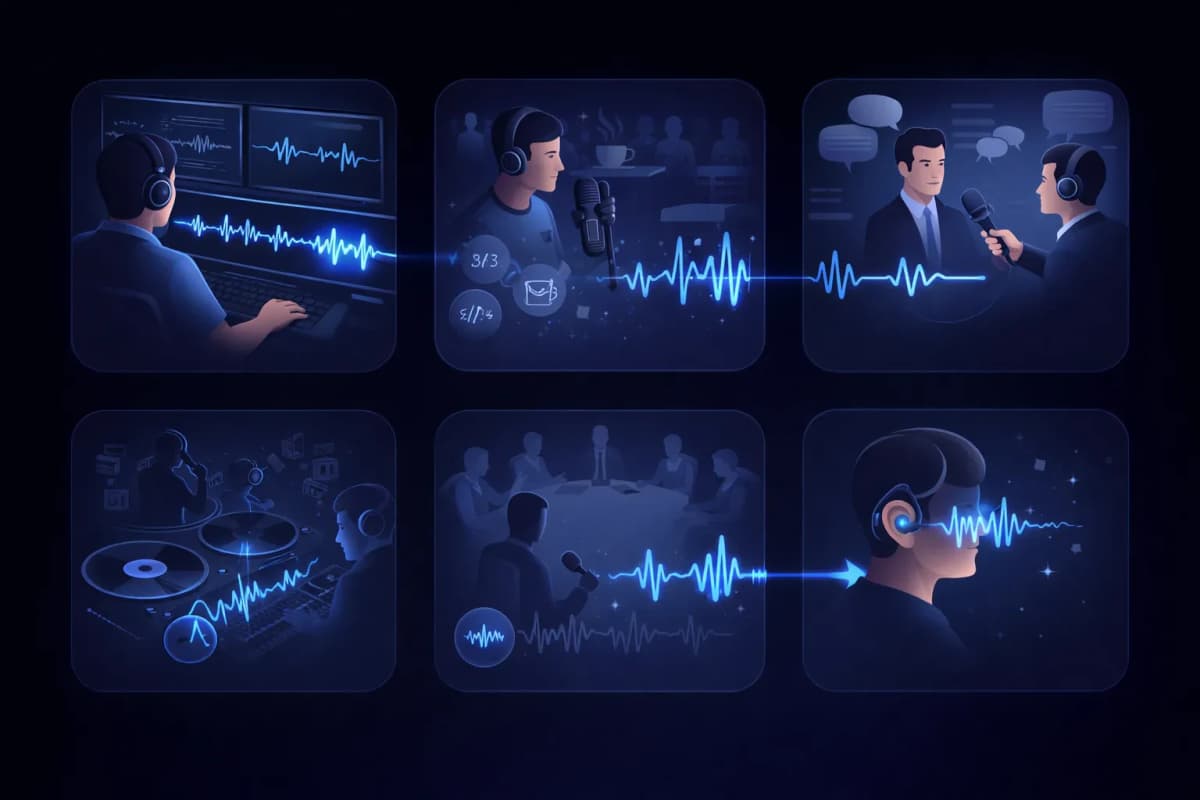
Cas d'Utilisation de l'Isolateur Vocal
Post-Production Vidéo
Nettoyez les pistes de dialogue en supprimant le bruit de fond des enregistrements vidéo.
Édition de Podcast
Supprimez le bruit de café, les sons de circulation et autres bruits indésirables des enregistrements de podcast.
Transcription d'Interviews
Isolez les voix des intervenants pour des résultats de transcription vocale plus précis.
Extraction Vocale
Extrayez les voix des pistes musicales pour des remixes, du karaoké ou des versions a cappella.
Enregistrements de Réunions et Conférences
Nettoyez les enregistrements de réunions en isolant les voix des intervenants du bruit ambiant.
Accessibilité
Aidez les personnes malentendantes en isolant la parole des environnements audio complexes.
Pourquoi Choisir l'Isolateur Vocal AnySpeech?
- Isolation vocale IA de qualité studio
- Compatible avec tous les principaux formats audio
- Intégré avec la synthèse vocale
- Intégré avec le clonage vocal
- Une seule plateforme pour tous vos besoins audio
- Tarification abordable basée sur les crédits
HOW IT WORKS
How Does AI Noise Removal Work?
An AI voice isolator separates speech from noise by reading the audio's frequency map: it recognizes the patterns human voices make, keeps them, and rebuilds the track with everything else removed.
Speech and noise leave different fingerprints
On a spectrogram, a human voice draws distinctive shapes — harmonics, formants, the rhythm of syllables. Air-conditioning hum, traffic, and café chatter each look very different. The model has learned both, so it can tell them apart even when they overlap.
Reconstruction, not filtering
Classic noise filters cut whole frequency ranges, which dulls the voice along with the noise. AI isolation instead predicts what the clean voice should sound like and rebuilds it, preserving brightness and detail that filters would destroy.
Why the result sounds studio-recorded
Because the voice is rebuilt rather than carved out, the output keeps natural sibilance and presence without the noise floor. A phone recording from a kitchen can come out sounding like a booth take.

WHICH TOOL?
Voice Isolator vs Vocal Remover: Which Do You Need?
The two tools sound similar but solve opposite problems. The quick rule: spoken recording with unwanted noise — Voice Isolator. A song you want split into parts — Vocal Remover.
Voice Isolator — for spoken recordings
Use it when the voice is the content and everything else is pollution: podcast takes, interviews, lectures, voice memos. You get one clean speech track back.
Vocal Remover — for songs
Use it when you're working with music and want the parts, not a cleanup: it splits a finished song into an acapella and an instrumental, and keeps both.
At a glance
| Question | Voice Isolator | Vocal Remover |
|---|---|---|
| What goes in | Spoken audio with noise | A finished song |
| What comes out | One clean voice track | Vocals + instrumental stems |
| What gets removed | Noise, hum, chatter | Nothing — everything is kept, separated |
| Typical user | Podcasters, students, journalists | Singers, DJs, karaoke fans |
Working with a song instead? Head to the vocal remover.
NOISE GUIDE
Which Noises Clean Up Best?
Not all noise is equally removable. Here's an honest map of what to expect before you upload.
Excellent results
- Air conditioning, fans, and electrical hum
- Computer and microphone hiss
- Rain and steady wind rumble
Steady, predictable noise is the easiest to model — it disappears almost completely.
Good results
- Café chatter and crowd murmur
- Traffic and street ambience
- Keyboard clicks and desk thumps
Intermittent noise usually cleans up well, though a loud burst directly over a word can leave a trace.
Know the limits
- Heavy reverb baked into the room sound
- Another voice speaking over yours
- Clipped or distorted source audio
These overlap with the voice itself, so expect improvement rather than perfection — re-record if you can.
WORKFLOW
Where Isolation Fits in Your Audio Pipeline
Clean speech isn't just nicer to hear — it makes every downstream AI tool measurably better.
Before transcription
A clean track means fewer misheard words. Isolate first, then run speech to text for a tighter transcript.
Before voice cloning
Cloning learns everything in your sample, including the noise. Isolating a recording first gives the clone a cleaner voice print.
Before publishing
Podcast episodes and video voiceovers ship faster when you fix the audio in one pass instead of re-recording.
Questions Fréquemment Posées
Isolez les Voix avec l'IA Maintenant
Téléchargez votre fichier audio et obtenez une voix propre, de qualité studio en quelques secondes.