
Isolatore Vocale
Rimuovi il rumore di fondo da qualsiasi audio con l'IA, istantaneamente.
Ascolta la Differenza
Scopri come la nostra IA isola la voce dal rumore di fondo
[Example]Cafe background noise
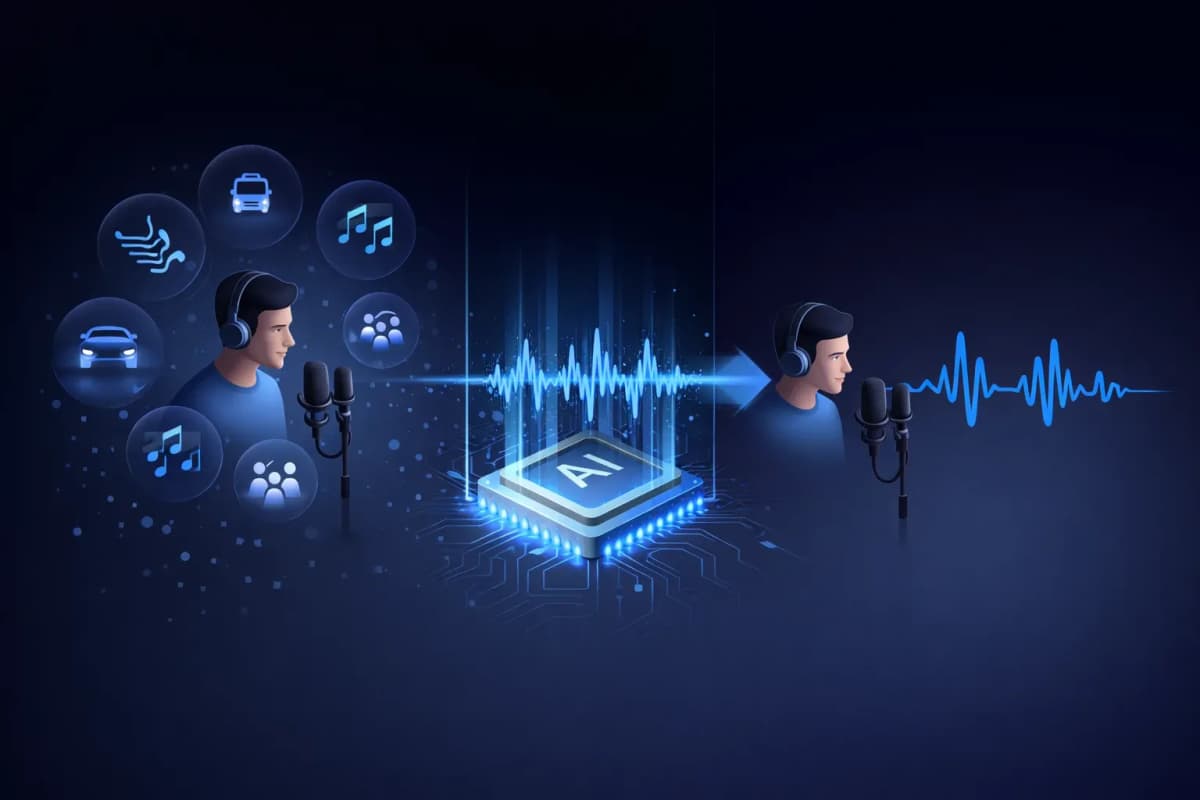
Cos'è un Isolatore Vocale?
Un isolatore vocale è uno strumento alimentato dall'IA che separa il parlato umano dal rumore di fondo nelle registrazioni audio. A differenza dei filtri antirumore tradizionali che riducono semplicemente i livelli di volume, il nostro isolatore vocale IA utilizza reti neurali di deep learning per identificare ed estrarre i pattern vocali rimuovendo suoni indesiderati come musica, traffico, vento e rumore ambientale. Il risultato è un audio vocale pulito e di qualità studio che sembra registrato in un ambiente professionale.
Caratteristiche Principali del Nostro Isolatore Vocale IA
Isolamento Vocale Alimentato dall'IA
Reti neurali di deep learning addestrate su milioni di campioni audio per separare con precisione la voce da qualsiasi rumore di fondo.
Supporto Multi-Formato
Carica file audio MP3, WAV, OGG, AAC o FLAC. Il nostro isolatore vocale gestisce tutti i principali formati audio.
Elaborazione Ultra-Rapida
Ottieni il tuo audio vocale isolato in 20-40 secondi. Niente attese per lunghi tempi di elaborazione.
Output Qualità Studio
Preserva le caratteristiche vocali naturali rimuovendo il rumore. L'output sembra registrato in uno studio professionale.
Integrato con TTS e Clonazione
Flusso di lavoro unico: isola una voce, poi clonala o genera nuovo parlato. Tutto in una piattaforma — solo su AnySpeech.
Privacy al Primo Posto
I tuoi file audio vengono eliminati automaticamente dopo 7 giorni. Non condividiamo né utilizziamo mai i tuoi dati per l'addestramento.

Come Usare il Nostro Isolatore Vocale
Carica il Tuo File
Trascina e rilascia o clicca per caricare il tuo file audio. Supporta MP3, WAV, OGG, AAC, FLAC.
L'IA Elabora l'Audio
Il nostro isolatore vocale IA analizza il tuo audio e separa automaticamente la voce dal rumore di fondo.
Anteprima e Confronto
Ascolta l'audio originale e quello isolato fianco a fianco. Nota la differenza istantaneamente.
Scarica Audio Pulito
Scarica la tua voce isolata in formato audio di alta qualità, pronta per qualsiasi progetto.
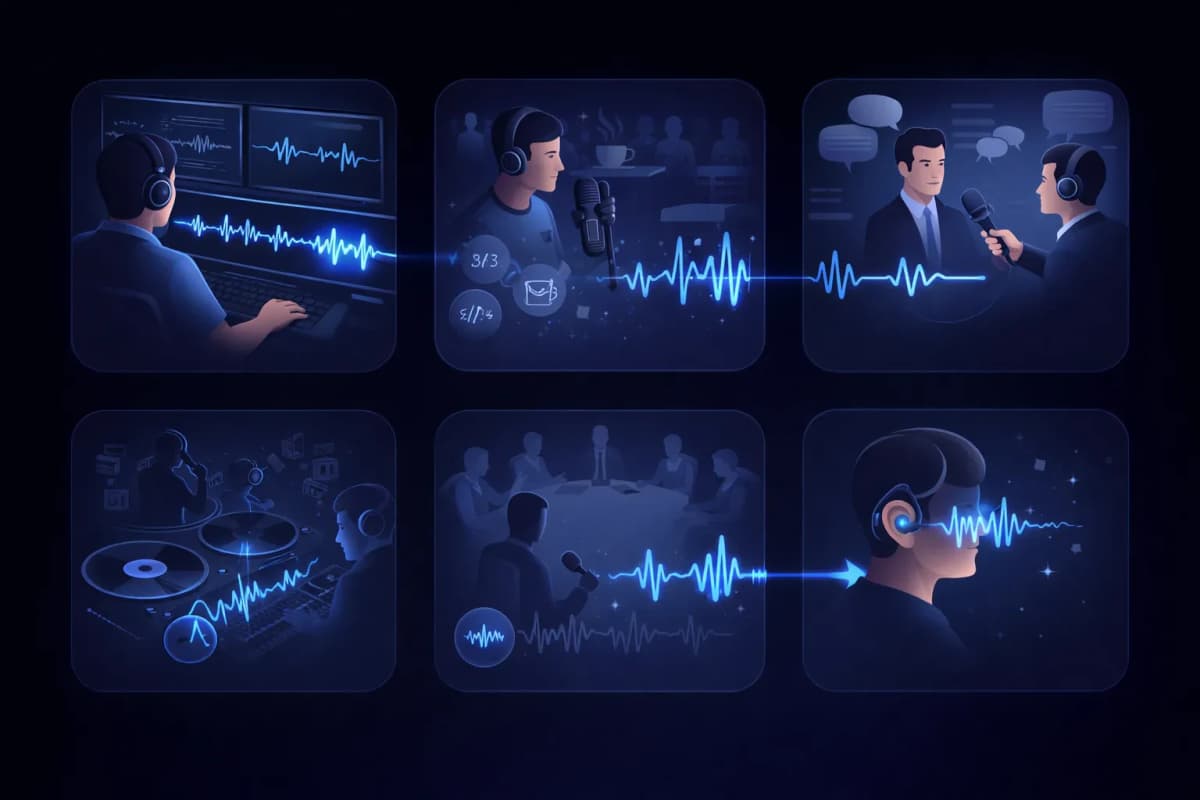
Casi d'Uso dell'Isolatore Vocale
Post-Produzione Video
Pulisci le tracce dei dialoghi rimuovendo il rumore di fondo dalle registrazioni video.
Editing Podcast
Rimuovi rumori del bar, suoni del traffico e altri audio indesiderati dalle registrazioni podcast.
Trascrizione Interviste
Isola le voci dei relatori per risultati di trascrizione da parlato a testo più accurati.
Estrazione Vocale
Estrai le voci dalle tracce musicali per remix, karaoke o versioni a cappella.
Registrazione Riunioni e Lezioni
Pulisci le registrazioni delle riunioni isolando le voci dei relatori dal rumore ambientale.
Accessibilità
Aiuta gli utenti con problemi di udito isolando il parlato da ambienti audio complessi.
Perché Scegliere l'Isolatore Vocale AnySpeech?
- Isolamento vocale IA di qualità studio
- Supporta tutti i principali formati audio
- Integrato con la Sintesi Vocale
- Integrato con la Clonazione Vocale
- Una piattaforma per tutte le esigenze audio
- Prezzi accessibili basati sui crediti
HOW IT WORKS
How Does AI Noise Removal Work?
An AI voice isolator separates speech from noise by reading the audio's frequency map: it recognizes the patterns human voices make, keeps them, and rebuilds the track with everything else removed.
Speech and noise leave different fingerprints
On a spectrogram, a human voice draws distinctive shapes — harmonics, formants, the rhythm of syllables. Air-conditioning hum, traffic, and café chatter each look very different. The model has learned both, so it can tell them apart even when they overlap.
Reconstruction, not filtering
Classic noise filters cut whole frequency ranges, which dulls the voice along with the noise. AI isolation instead predicts what the clean voice should sound like and rebuilds it, preserving brightness and detail that filters would destroy.
Why the result sounds studio-recorded
Because the voice is rebuilt rather than carved out, the output keeps natural sibilance and presence without the noise floor. A phone recording from a kitchen can come out sounding like a booth take.

WHICH TOOL?
Voice Isolator vs Vocal Remover: Which Do You Need?
The two tools sound similar but solve opposite problems. The quick rule: spoken recording with unwanted noise — Voice Isolator. A song you want split into parts — Vocal Remover.
Voice Isolator — for spoken recordings
Use it when the voice is the content and everything else is pollution: podcast takes, interviews, lectures, voice memos. You get one clean speech track back.
Vocal Remover — for songs
Use it when you're working with music and want the parts, not a cleanup: it splits a finished song into an acapella and an instrumental, and keeps both.
At a glance
| Question | Voice Isolator | Vocal Remover |
|---|---|---|
| What goes in | Spoken audio with noise | A finished song |
| What comes out | One clean voice track | Vocals + instrumental stems |
| What gets removed | Noise, hum, chatter | Nothing — everything is kept, separated |
| Typical user | Podcasters, students, journalists | Singers, DJs, karaoke fans |
Working with a song instead? Head to the vocal remover.
NOISE GUIDE
Which Noises Clean Up Best?
Not all noise is equally removable. Here's an honest map of what to expect before you upload.
Excellent results
- Air conditioning, fans, and electrical hum
- Computer and microphone hiss
- Rain and steady wind rumble
Steady, predictable noise is the easiest to model — it disappears almost completely.
Good results
- Café chatter and crowd murmur
- Traffic and street ambience
- Keyboard clicks and desk thumps
Intermittent noise usually cleans up well, though a loud burst directly over a word can leave a trace.
Know the limits
- Heavy reverb baked into the room sound
- Another voice speaking over yours
- Clipped or distorted source audio
These overlap with the voice itself, so expect improvement rather than perfection — re-record if you can.
WORKFLOW
Where Isolation Fits in Your Audio Pipeline
Clean speech isn't just nicer to hear — it makes every downstream AI tool measurably better.
Before transcription
A clean track means fewer misheard words. Isolate first, then run speech to text for a tighter transcript.
Before voice cloning
Cloning learns everything in your sample, including the noise. Isolating a recording first gives the clone a cleaner voice print.
Before publishing
Podcast episodes and video voiceovers ship faster when you fix the audio in one pass instead of re-recording.
Domande Frequenti
Isola le Voci con l'IA Ora
Carica il tuo file audio e ottieni una voce pulita di qualità studio in pochi secondi.