
语音降噪
用 AI 即时去除任何音频中的背景噪音。
听听差别
看看我们的 AI 如何从背景噪音中隔离人声
[Example]Cafe background noise
什么是语音降噪?
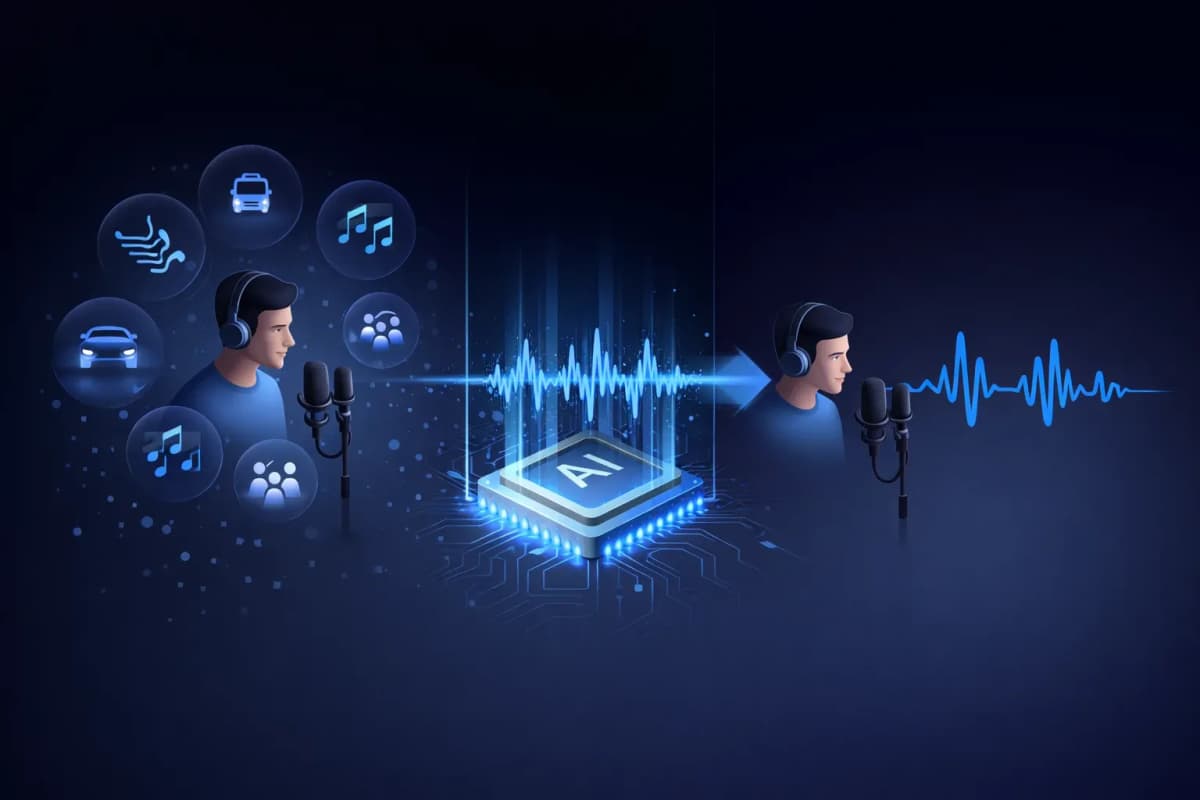
语音降噪是一种 AI 驱动的工具,可以从音频录音中分离人声和背景噪音。与传统的噪音滤波器只是简单降低音量不同,我们的 AI 语音降噪使用深度学习神经网络来识别和提取人声模式,同时去除音乐、交通、风声和环境噪音等不需要的声音。最终得到的是干净的、录音棚级别的语音音频,听起来就像在专业环境中录制的一样。
AI 语音降噪的主要特性
AI 驱动的语音降噪
使用数百万音频样本训练的深度学习神经网络,精确地将人声与任何背景噪音分离。
多格式支持
上传 MP3、WAV、OGG、AAC 或 FLAC 音频文件。我们的语音降噪处理所有主流音频格式。
闪电般的处理速度
20-40 秒内即可获得隔离后的语音音频。无需漫长等待处理时间。
录音棚级别的输出质量
在去除噪音的同时保留自然的语音特征。输出效果如同在专业录音棚中录制。
与 TTS 和克隆集成
独特的工作流程: 隔离人声,然后克隆它或生成新语音。一个平台完成所有操作 — 仅在 AnySpeech 提供。
隐私优先
您的音频文件会在 7 天后自动删除。我们绝不会分享或使用您的数据进行训练。

如何使用我们的语音降噪
上传文件
拖放或点击上传您的音频文件。支持 MP3、WAV、OGG、AAC、FLAC。
AI 处理音频
我们的 AI 语音降噪分析您的音频,自动将人声与背景噪音分离。
预览和对比
并排聆听原始音频和隔离后的音频。即时感受差异。
下载干净音频
下载高质量音频格式的隔离人声,随时用于任何项目。
语音降噪使用场景
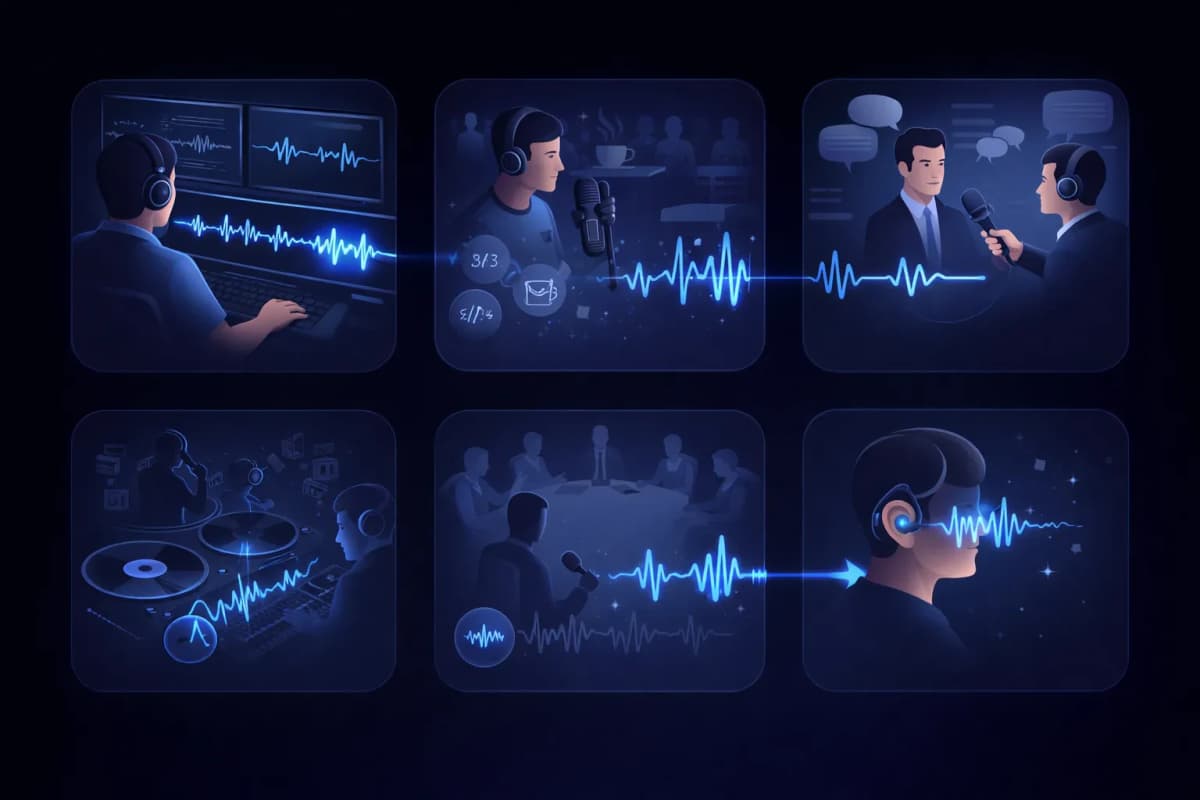
视频后期制作
通过去除视频录制中的背景噪音来清理对话音轨。
播客编辑
从播客录音中去除咖啡馆噪音、交通声和其他不需要的音频。
采访转录
隔离说话者的声音,以获得更准确的语音转文字结果。
人声提取
从音乐曲目中提取人声,用于混音、卡拉OK或清唱版本。
会议和讲座录音
通过隔离说话者的声音来清理会议录音中的环境噪音。
无障碍服务
通过从复杂音频环境中隔离语音,帮助听力障碍用户。
为什么选择 AnySpeech 语音降噪?
- 录音棚级别的 AI 语音降噪
- 支持所有主流音频格式
- 与文字转语音集成
- 与声音克隆集成
- 一个平台满足所有音频需求
- 实惠的积分制定价
HOW IT WORKS
How Does AI Noise Removal Work?
An AI voice isolator separates speech from noise by reading the audio's frequency map: it recognizes the patterns human voices make, keeps them, and rebuilds the track with everything else removed.
Speech and noise leave different fingerprints
On a spectrogram, a human voice draws distinctive shapes — harmonics, formants, the rhythm of syllables. Air-conditioning hum, traffic, and café chatter each look very different. The model has learned both, so it can tell them apart even when they overlap.
Reconstruction, not filtering
Classic noise filters cut whole frequency ranges, which dulls the voice along with the noise. AI isolation instead predicts what the clean voice should sound like and rebuilds it, preserving brightness and detail that filters would destroy.
Why the result sounds studio-recorded
Because the voice is rebuilt rather than carved out, the output keeps natural sibilance and presence without the noise floor. A phone recording from a kitchen can come out sounding like a booth take.

WHICH TOOL?
Voice Isolator vs Vocal Remover: Which Do You Need?
The two tools sound similar but solve opposite problems. The quick rule: spoken recording with unwanted noise — Voice Isolator. A song you want split into parts — Vocal Remover.
Voice Isolator — for spoken recordings
Use it when the voice is the content and everything else is pollution: podcast takes, interviews, lectures, voice memos. You get one clean speech track back.
Vocal Remover — for songs
Use it when you're working with music and want the parts, not a cleanup: it splits a finished song into an acapella and an instrumental, and keeps both.
At a glance
| Question | Voice Isolator | Vocal Remover |
|---|---|---|
| What goes in | Spoken audio with noise | A finished song |
| What comes out | One clean voice track | Vocals + instrumental stems |
| What gets removed | Noise, hum, chatter | Nothing — everything is kept, separated |
| Typical user | Podcasters, students, journalists | Singers, DJs, karaoke fans |
Working with a song instead? Head to the vocal remover.
NOISE GUIDE
Which Noises Clean Up Best?
Not all noise is equally removable. Here's an honest map of what to expect before you upload.
Excellent results
- Air conditioning, fans, and electrical hum
- Computer and microphone hiss
- Rain and steady wind rumble
Steady, predictable noise is the easiest to model — it disappears almost completely.
Good results
- Café chatter and crowd murmur
- Traffic and street ambience
- Keyboard clicks and desk thumps
Intermittent noise usually cleans up well, though a loud burst directly over a word can leave a trace.
Know the limits
- Heavy reverb baked into the room sound
- Another voice speaking over yours
- Clipped or distorted source audio
These overlap with the voice itself, so expect improvement rather than perfection — re-record if you can.
WORKFLOW
Where Isolation Fits in Your Audio Pipeline
Clean speech isn't just nicer to hear — it makes every downstream AI tool measurably better.
Before transcription
A clean track means fewer misheard words. Isolate first, then run speech to text for a tighter transcript.
Before voice cloning
Cloning learns everything in your sample, including the noise. Isolating a recording first gives the clone a cleaner voice print.
Before publishing
Podcast episodes and video voiceovers ship faster when you fix the audio in one pass instead of re-recording.