
Voice Isolator
Entfernen Sie Hintergrundgeräusche aus jedem Audio mit KI, sofort.
Hören Sie den Unterschied
Sehen Sie, wie unsere KI Stimme von Hintergrundgeräuschen isoliert
[Example]Cafe background noise
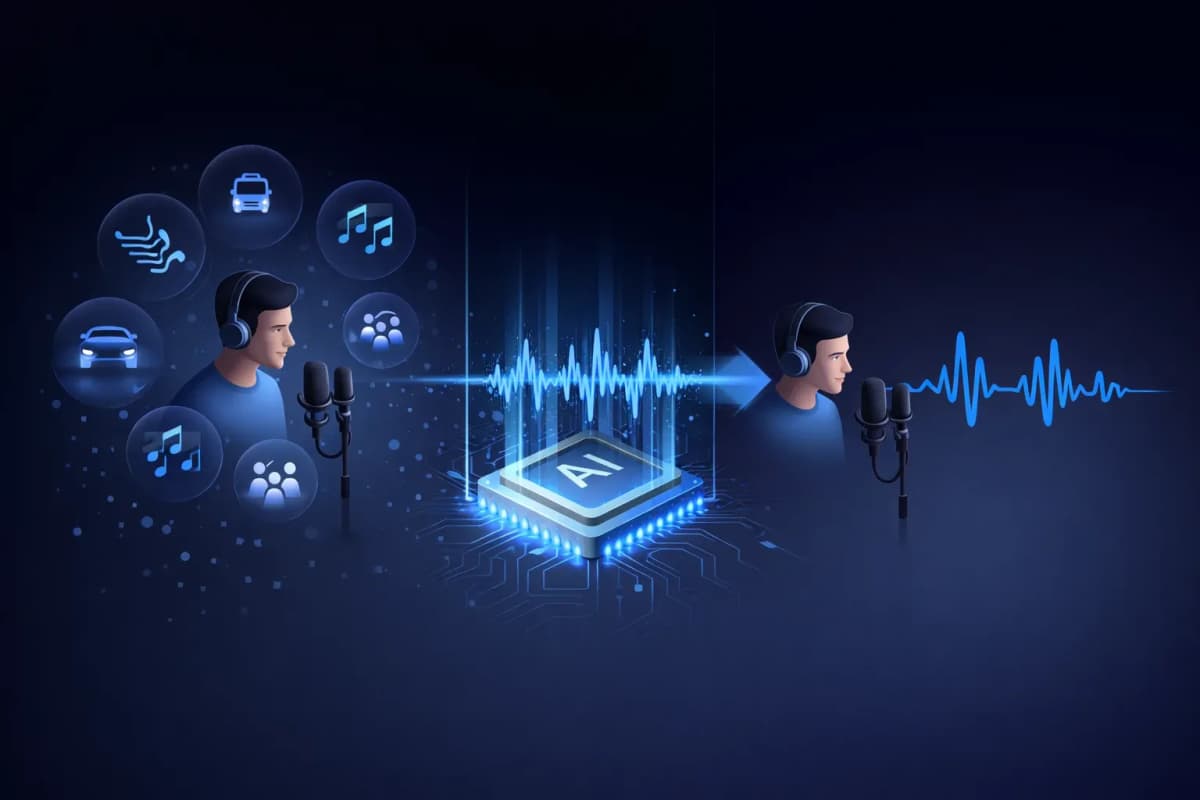
Was ist ein Stimmenisolator?
Ein Stimmenisolator ist ein KI-gestütztes Tool, das menschliche Sprache von Hintergrundgeräuschen in Audioaufnahmen trennt. Im Gegensatz zu herkömmlichen Rauschfiltern, die einfach Lautstärkepegel reduzieren, verwendet unser KI-Stimmenisolator neuronale Netze mit Deep Learning, um Stimmmuster zu identifizieren und zu extrahieren und gleichzeitig unerwünschte Geräusche wie Musik, Verkehr, Wind und Umgebungslärm zu entfernen. Das Ergebnis ist sauberes Audio in Studioqualität, das klingt, als wäre es in einer professionellen Umgebung aufgenommen worden.
Hauptfunktionen Unseres KI-Stimmenisolators
KI-gestützte Stimmenisolation
Neuronale Netze mit Deep Learning, trainiert auf Millionen von Audio-Samples, um Stimme präzise von jedem Hintergrundgeräusch zu trennen.
Multi-Format-Unterstützung
Laden Sie MP3-, WAV-, OGG-, AAC- oder FLAC-Audiodateien hoch. Unser Stimmenisolator verarbeitet alle gängigen Audioformate.
Blitzschnelle Verarbeitung
Erhalten Sie Ihr isoliertes Stimmaudio in 20-40 Sekunden. Kein Warten auf lange Verarbeitungszeiten.
Studioqualität
Bewahren Sie natürliche Stimmcharakteristiken bei gleichzeitiger Rauschentfernung. Das Ergebnis klingt wie eine professionelle Studioaufnahme.
Integriert mit TTS und Klonen
Einzigartiger Workflow: Isolieren Sie eine Stimme, klonen Sie sie dann oder erzeugen Sie neue Sprache. Alles auf einer Plattform — nur bei AnySpeech.
Datenschutz zuerst
Ihre Audiodateien werden nach 7 Tagen automatisch gelöscht. Wir teilen oder verwenden Ihre Daten niemals für Training.

So Verwenden Sie Unseren Stimmenisolator
Laden Sie Ihre Datei Hoch
Ziehen und ablegen oder klicken Sie zum Hochladen Ihrer Audiodatei. Unterstützt MP3, WAV, OGG, AAC, FLAC.
KI Verarbeitet Audio
Unser KI-Stimmenisolator analysiert Ihr Audio und trennt automatisch Stimme von Hintergrundgeräuschen.
Vorschau und Vergleich
Hören Sie das Original- und isolierte Audio nebeneinander. Hören Sie den Unterschied sofort.
Sauberes Audio Herunterladen
Laden Sie Ihre isolierte Stimme in hochwertigem Audioformat herunter, bereit für jedes Projekt.
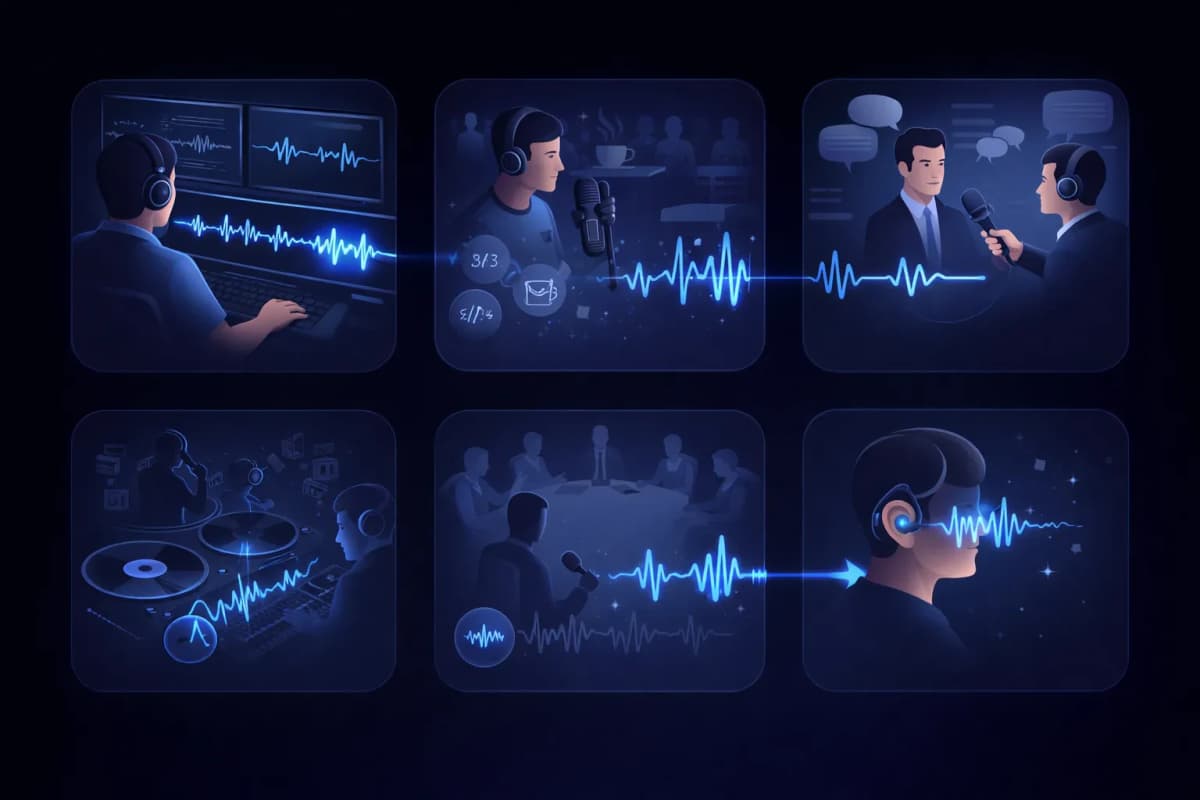
Anwendungsfälle des Stimmenisolators
Video-Postproduktion
Bereinigen Sie Dialogspuren, indem Sie Hintergrundgeräusche aus Videoaufnahmen entfernen.
Podcast-Bearbeitung
Entfernen Sie Café-Lärm, Verkehrsgeräusche und andere unerwünschte Klänge aus Podcast-Aufnahmen.
Interview-Transkription
Isolieren Sie Sprecherstimmen für genauere Sprache-zu-Text-Transkriptionsergebnisse.
Gesangsextraktion
Extrahieren Sie Gesang aus Musiktiteln für Remixe, Karaoke oder A-cappella-Versionen.
Meeting- und Vorlesungsaufnahmen
Bereinigen Sie Meeting-Aufnahmen, indem Sie Sprecherstimmen vom Raumgeräusch isolieren.
Barrierefreiheit
Helfen Sie hörgeschädigten Nutzern, indem Sie Sprache aus komplexen Audio-Umgebungen isolieren.
Warum den AnySpeech Stimmenisolator Wählen?
- KI-Stimmenisolation in Studioqualität
- Unterstützt alle gängigen Audioformate
- Integriert mit Sprachsynthese
- Integriert mit Stimmenklonen
- Eine Plattform für alle Audio-Bedürfnisse
- Erschwingliche kreditbasierte Preisgestaltung
HOW IT WORKS
How Does AI Noise Removal Work?
An AI voice isolator separates speech from noise by reading the audio's frequency map: it recognizes the patterns human voices make, keeps them, and rebuilds the track with everything else removed.
Speech and noise leave different fingerprints
On a spectrogram, a human voice draws distinctive shapes — harmonics, formants, the rhythm of syllables. Air-conditioning hum, traffic, and café chatter each look very different. The model has learned both, so it can tell them apart even when they overlap.
Reconstruction, not filtering
Classic noise filters cut whole frequency ranges, which dulls the voice along with the noise. AI isolation instead predicts what the clean voice should sound like and rebuilds it, preserving brightness and detail that filters would destroy.
Why the result sounds studio-recorded
Because the voice is rebuilt rather than carved out, the output keeps natural sibilance and presence without the noise floor. A phone recording from a kitchen can come out sounding like a booth take.

WHICH TOOL?
Voice Isolator vs Vocal Remover: Which Do You Need?
The two tools sound similar but solve opposite problems. The quick rule: spoken recording with unwanted noise — Voice Isolator. A song you want split into parts — Vocal Remover.
Voice Isolator — for spoken recordings
Use it when the voice is the content and everything else is pollution: podcast takes, interviews, lectures, voice memos. You get one clean speech track back.
Vocal Remover — for songs
Use it when you're working with music and want the parts, not a cleanup: it splits a finished song into an acapella and an instrumental, and keeps both.
At a glance
| Question | Voice Isolator | Vocal Remover |
|---|---|---|
| What goes in | Spoken audio with noise | A finished song |
| What comes out | One clean voice track | Vocals + instrumental stems |
| What gets removed | Noise, hum, chatter | Nothing — everything is kept, separated |
| Typical user | Podcasters, students, journalists | Singers, DJs, karaoke fans |
Working with a song instead? Head to the vocal remover.
NOISE GUIDE
Which Noises Clean Up Best?
Not all noise is equally removable. Here's an honest map of what to expect before you upload.
Excellent results
- Air conditioning, fans, and electrical hum
- Computer and microphone hiss
- Rain and steady wind rumble
Steady, predictable noise is the easiest to model — it disappears almost completely.
Good results
- Café chatter and crowd murmur
- Traffic and street ambience
- Keyboard clicks and desk thumps
Intermittent noise usually cleans up well, though a loud burst directly over a word can leave a trace.
Know the limits
- Heavy reverb baked into the room sound
- Another voice speaking over yours
- Clipped or distorted source audio
These overlap with the voice itself, so expect improvement rather than perfection — re-record if you can.
WORKFLOW
Where Isolation Fits in Your Audio Pipeline
Clean speech isn't just nicer to hear — it makes every downstream AI tool measurably better.
Before transcription
A clean track means fewer misheard words. Isolate first, then run speech to text for a tighter transcript.
Before voice cloning
Cloning learns everything in your sample, including the noise. Isolating a recording first gives the clone a cleaner voice print.
Before publishing
Podcast episodes and video voiceovers ship faster when you fix the audio in one pass instead of re-recording.
Häufig Gestellte Fragen
Stimmen Jetzt mit KI Isolieren
Laden Sie Ihre Audiodatei hoch und erhalten Sie in Sekunden saubere Stimme in Studioqualität.